🚗 Delhi’s Great Vehicle Exit: Why Thousands of Cars Are Leaving the Capital

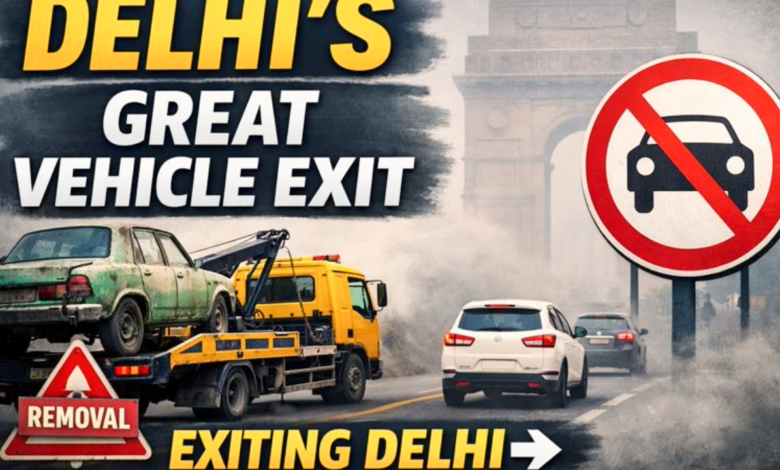
Delhi, one of the world’s most densely populated and polluted cities, is making national headlines — not just for its air quality woes, but for a dramatic shift in how vehicles are regulated and removed from the roads. Dubbed the “Great Vehicle Exit,” this movement reflects Delhi’s bold attempt to clean up its air while balancing city congestion, environmental goals and commuter convenience.
🌆 What Is the Great Vehicle Exit?
Simply put, the Great Vehicle Exit refers to the mass removal of old and polluting vehicles from Delhi’s roads, particularly end-of-life vehicles (ELVs) — cars and bikes that have crossed their useful age limit. The city government, following strict orders from environmental authorities like the National Green Tribunal (NGT) and Supreme Court, has tightened rules to reduce emissions and improve air quality.
📊 Key Numbers You Should Know
🚙 Over 8 Lakh Vehicles Have Been Sent Out
According to the latest official data, more than 8,30,000 vehicles have been issued No Objection Certificates (NOCs) in the last four years — enabling them to be deregistered or re-registered outside Delhi.
📉 Low Uptake in Early Years
Initially, owners were slow to take action: until 2021-22, only 82,340 NOCs were obtained. However, strict enforcement and rising penalties have dramatically increased these numbers in recent years.
📋 Why Is This Happening?
🌫️ Air Pollution Concerns
Delhi’s air quality hits dangerous levels every winter. Older vehicles — especially diesel cars older than 10 years and petrol cars older than 15 years — emit much more harmful smoke than modern vehicles.
Under new rules, many such vehicles:
- Are not allowed to fuel up at petrol pumps,
- Face impoundment or mandatory scrappage,
- May be denied entry or plying rights on major city roads.
⚖️ Strict Court and Tribunal Orders
The NGT and Supreme Court have directed the government to take stringent action against high-emitting vehicles, leading to bans, heavy fines, and restrictions aimed at rapidly reducing pollution.
🛠️ Policy Changes That Impact Vehicle Owners
📌 One-Year Limit on NOCs Removed
Earlier, owners had just one year after deregistration to obtain an NOC — a clause that created a backlog of vehicles stuck in limbo. That limit has now been lifted, making it easier for people to move or re-register their vehicles outside Delhi.
🚫 Entry Restrictions for Non-BS VI Vehicles
Delhi has banned the entry of non-BS VI vehicles registered outside the city, stepping up border checks and vehicle compliance enforcement at major entry points.
🚗 What This Means for You (Drivers & Commuters)
- Old vehicles lose road access: If your vehicle doesn’t meet emission standards, it may be barred from Delhi roads or denied fuel.
- Getting an NOC is crucial: To avoid fines or towing, owners of older cars should apply for a No Objection Certificate.
- Consider scrapping or upgrading: Delhi’s scrappage policy offers incentives to permanently dismantle old cars in authorised facilities.
🌍 The Bigger Picture: Pollution, Health & City Life
Delhi’s efforts are part of a broader strategy to improve life quality:
✔️ combat smog and hazardous air
✔️ reduce respiratory health risks
✔️ shift towards cleaner vehicles and public transport
✔️ cut down congestion in busy city arteries
While not perfect, the Great Vehicle Exit represents a clear commitment toward sustainability — and it’s reshaping how people think about vehicle ownership in India’s capital.
🧠 Final Thoughts
The Great Vehicle Exit isn’t just about numbers or rules — it’s about pushing Delhi toward cleaner air and healthier living. For commuters, drivers, and environmental advocates alike, this initiative signals a new direction in urban mobility policy.





2 Comments