
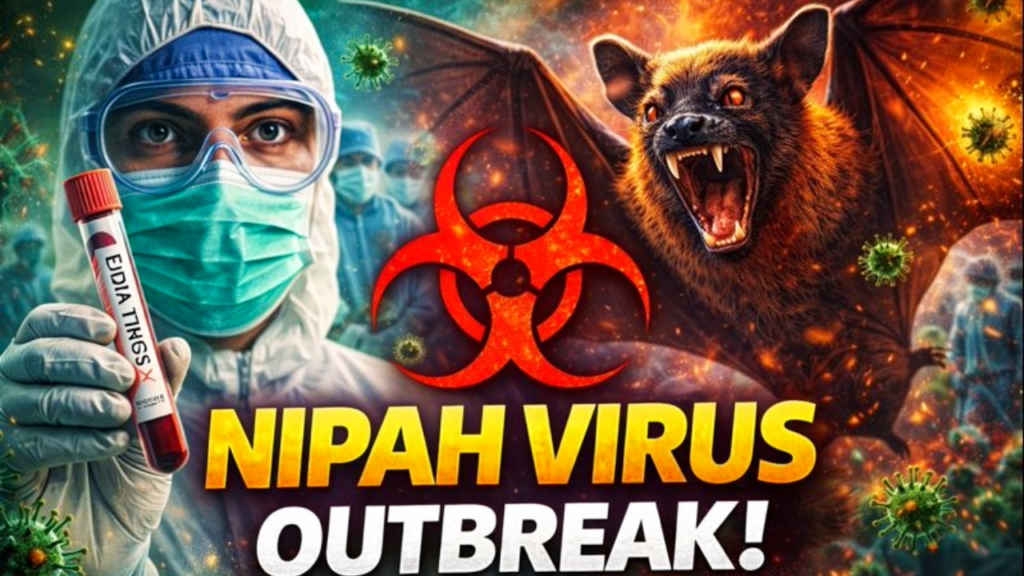
The Nipah virus outbreak is one of the most serious public health concerns in recent years. Known for its high fatality rate and fast spread, the Nipah virus has caused several outbreaks in South and Southeast Asia, especially in countries like India and Bangladesh.
In this blog, you will learn everything about the Nipah virus — its causes, symptoms, transmission, treatment, prevention, and how to stay safe.
📌 What Is Nipah Virus?
The Nipah virus (NiV) is a deadly virus that belongs to the Paramyxoviridae family. It was first discovered in 1999 in Malaysia.
Nipah is a zoonotic virus, meaning it spreads from animals to humans.
Main Hosts:
- Fruit bats (Pteropus species) – Natural carriers
- Pigs – Intermediate hosts
- Humans – Final hosts
Fruit bats carry the virus without showing symptoms but can transmit it to humans.
🌍 History of Nipah Virus Outbreaks
Several Nipah virus outbreaks have occurred over the years:
Major Outbreaks:
- 1999 – Malaysia & Singapore (First outbreak)
- 2001–2023 – Bangladesh (Multiple outbreaks)
- 2018, 2021, 2023 – India (Kerala)
- Philippines – 2014
Most outbreaks were linked to bat-contaminated food or close human contact.
🔄 How Does Nipah Virus Spread?
The Nipah virus spreads in three main ways:
🐦 1. Animal to Human
- Eating fruits bitten by bats
- Drinking raw date palm sap contaminated by bats
🤝 2. Human to Human
- Close contact with infected person
- Exposure to body fluids (saliva, blood, urine)
🐷 3. Animal to Human (via Pigs)
- Contact with infected pigs
- Handling pig meat without protection
Human-to-human transmission makes Nipah extremely dangerous.
🤒 Symptoms of Nipah Virus Infection
Symptoms usually appear 4 to 14 days after infection.
Early Symptoms:
- Fever
- Headache
- Muscle pain
- Vomiting
- Sore throat
Severe Symptoms:
- Dizziness
- Drowsiness
- Confusion
- Breathing difficulty
- Encephalitis (Brain swelling)
- Coma
Without proper treatment, Nipah can be fatal.
⚠️ Why Is Nipah Virus So Dangerous?
Nipah virus is classified as a high-risk pathogen because:
✅ Mortality rate: 40%–75%
✅ No confirmed vaccine
✅ No specific antiviral treatment
✅ Can cause brain infection
✅ Spreads through close contact
This makes prevention extremely important.
💊 Treatment of Nipah Virus
Currently, there is no specific medicine or vaccine for Nipah virus.
Available Treatment:
- Supportive care
- Oxygen therapy
- IV fluids
- Ventilator support
- Treatment for complications
Early detection and hospitalization improve survival chances.
🛡️ Prevention of Nipah Virus
Prevention is the best defense against Nipah.
🧼 Personal Safety Tips:
✔️ Wash hands frequently
✔️ Avoid close contact with infected people
✔️ Wear masks and gloves in risk areas
✔️ Do not touch bats or sick animals
🍎 Food Safety:
✔️ Wash fruits thoroughly
✔️ Avoid half-eaten fruits
✔️ Do not drink raw date palm sap
🏥 Healthcare Safety:
✔️ Use PPE kits
✔️ Isolate suspected patients
✔️ Follow infection control rules
🌐 Government & WHO Response
Governments and the World Health Organization (WHO) closely monitor Nipah outbreaks.
Key Measures:
- Contact tracing
- Quarantine
- Public awareness campaigns
- Travel monitoring
- Rapid testing
These steps help prevent large-scale spread.
📊 Nipah Virus in India: Focus on Kerala
India has faced multiple Nipah outbreaks, especially in Kerala.
Kerala Outbreaks:
- 2018 – Major outbreak
- 2021 – Limited cases
- 2023 – Controlled quickly
Kerala’s strong healthcare system played a key role in controlling the virus.
🔮 Future Risks of Nipah Virus
Experts believe Nipah remains a potential pandemic threat.
Reasons:
- Climate change affecting bat habitats
- Increased human-wildlife interaction
- Urban expansion
- Global travel
Researchers are working on vaccines and antiviral drugs.
⭐ Why Public Awareness Is Important
Awareness helps save lives.
When people know:
✔️ How Nipah spreads
✔️ What symptoms look like
✔️ When to seek help
Outbreaks can be controlled faster.
📝 Conclusion
The Nipah virus outbreak is a serious public health issue that requires immediate attention and responsible behavior. With its high death rate and lack of specific treatment, prevention and awareness remain the strongest weapons.
By following safety guidelines, maintaining hygiene, and staying informed, we can reduce the risk and protect our communities.
Stay safe. Stay informed. 🦠💙